 EN
EN

Engineering Structural Integrity into Military Emblem Production
When tactical outfitters, defense contractors, and equipment supply coordinators procure official unit identifiers, ensuring uncompromised structural longevity is an absolute operational priority. Years of collaborating with logistics teams and analyzing field equipment performance reveal a fundamental reality: manufacturing a reliable army patch demands much more than simply transferring digital vector artwork onto a piece of textile. In rigorous outdoor environments, military insignia function as critical markers of unit cohesion, rank recognition, and operational readiness. Field experience consistently demonstrates that overlooking foundational quality metrics leads to thread fraying, fading color saturation, and premature edge degradation during intense physical maneuvers, making rigorous upfront quality planning an indispensable requirement for professional procurement teams worldwide.
Selecting High-Grade Base Fabrics and UV-Resistant Threads
The foundational quality of any army patch begins with the deliberate selection of base textiles and heavy-duty construction threads. Modern military deployments expose uniforms and tactical loadouts to severe environmental extremes, including torrential downpours, abrasive desert sands, and prolonged ultraviolet radiation exposure. According to industrial textile testing reports published by equipment evaluation authorities, premium insignia production must incorporate heavy-duty polyester or nylon canvas bases coupled with UV-resistant synthetic threads that prevent color degradation under scorching sunlight. Furthermore, selecting the correct substrate thickness ensures that the finished emblem maintains optimal structural rigidity, preventing unsightly curling or warping along the borders even after enduring months of continuous friction.
Evaluating Stitch Density and Dimensional Edge Finishing
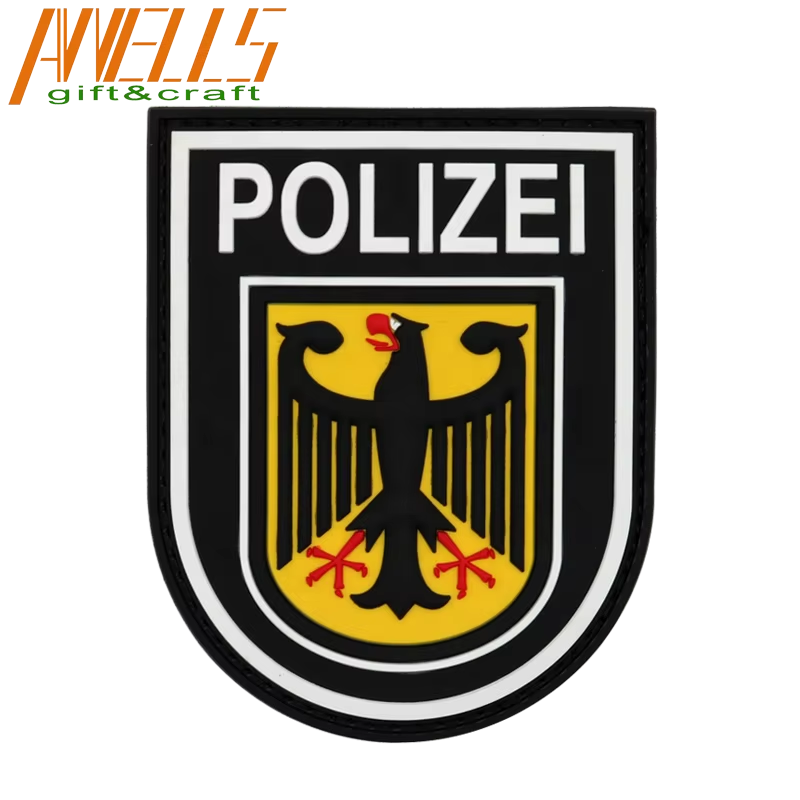
Visual clarity and tactile definition serve as primary indicators of superior craftsmanship in military heraldry. When evaluating a high-grade army patch, quality control inspectors closely examine stitch density, border tightness, and dimensional layering. Insufficient stitch count often results in loose loops, distorted typography, and gaps where the background fabric remains visible through the design. Advanced production protocols utilize high-density merrowed or heat-sealed borders that encapsulate the outer edges completely, preventing fraying during aggressive handling. For specialized units favoring molded alternatives, rigid PVC construction provides exceptional three-dimensional sharpness and total impermeability to moisture and sweat, ensuring that every tactical emblem remains crisp and legible across active service hours.
Inspecting Fastener Mechanics and Secure Attachment Systems
A brilliantly designed and meticulously crafted insignia loses its utility entirely if the attachment mechanism fails during active deployment. The physical interface connecting an army patch to tactical gear must withstand extreme mechanical tension, dynamic body movements, and rapid gear transitions. Industrial-grade hook-and-loop fastening systems—featuring high-shear-strength nylon hooks—provide the dependable retention required for fast-paced operational environments without accidental displacement. Alternatively, for permanent dress uniforms and formal garrison wear, traditional sew-on borders offer permanent fixation that eliminates any risk of fastener separation. Ensuring rigorous adhesive and mechanical testing guarantees that every issued piece remains firmly anchored through countless field exercises.
Managing Scalable Supply Chains and Rigorous Quality Oversight
Maintaining uniform excellence across large-scale tactical and military equipment distributions requires a streamlined supply chain anchored by uncompromising quality oversight. Inconsistent batch reproduction, substandard adhesive backing, or delayed logistics can compromise an entire unit's professional presentation before deployment even begins. Streamlining procurement requires working with specialized manufacturing partners who maintain strict quality control over every embroidery execution, injection molding, and thermal sealing process. By prioritizing high-grade raw materials and dependable international distribution networks, procurement directors can eliminate supply bottlenecks and guarantee uniform compliance across multiple regional commands and retail networks.
Precision Manufacturing Leadership for Modern Tactical Programs
Choosing the correct backing and construction method for any official insignia requires harmonizing functional resilience with uncompromising manufacturing standards. Whether an agency specifies permanent stitching for classic uniform standardization or versatile hook-and-loop platforms for fast-paced units, the underlying production quality remains critical. Awellsgift bridges the gap between complex procurement demands and advanced textile engineering by delivering precision-crafted insignia solutions. Through strict quality oversight, premium material selection, and dependable global distribution networks, Awellsgift empowers tactical outfitters and global distributors to acquire durable, regulation-compliant army patch options that uphold institutional authority and flawless operational performance worldwide. Establishing a reliable manufacturing alliance remains the ultimate cornerstone for organizations looking to expand their professional accessory catalog seamlessly.
Table of Contents
- Engineering Structural Integrity into Military Emblem Production
- Selecting High-Grade Base Fabrics and UV-Resistant Threads
- Evaluating Stitch Density and Dimensional Edge Finishing
- Inspecting Fastener Mechanics and Secure Attachment Systems
- Managing Scalable Supply Chains and Rigorous Quality Oversight
- Precision Manufacturing Leadership for Modern Tactical Programs