 EN
EN

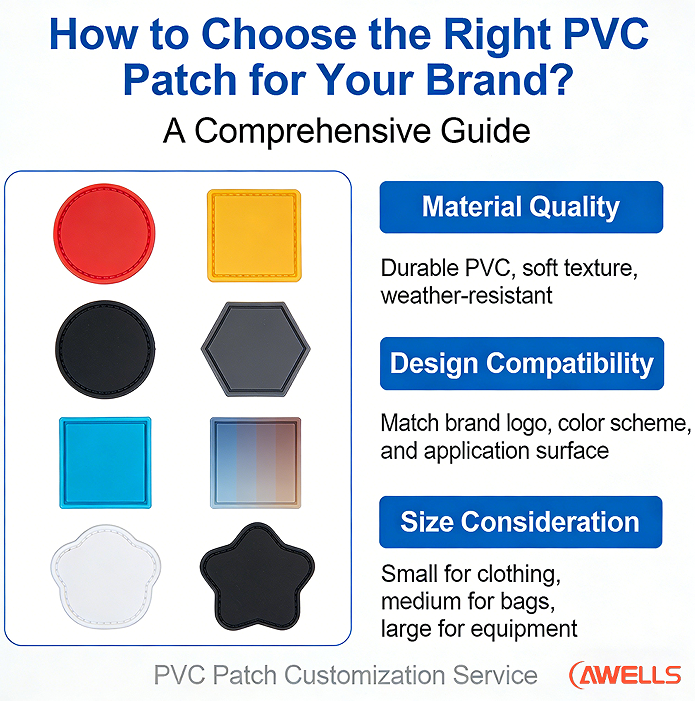
Define Your Brand’s Core Requirements for PVC Patch Use
Matching PVC patch aesthetics (2D vs. 3D, color fidelity, UV/glow effects) to brand voice and target audience
The look of PVC patches should match what the brand stands for and connect with people who see them. For companies wanting something simple but professional, 2D patches work best. They have those clean lines and minimal design elements that scream sophistication. Think about how many business cards or logos just need something understated yet high quality. On the flip side, there are these 3D textured options too. These patches actually stick out from fabric surfaces because they're raised all over. The texture creates interest when someone runs their fingers across it, plus it grabs attention visually. Brands associated with action sports gear or skate shops tend to go this route since it feels more dynamic and exciting compared to flat alternatives.
Getting colors right matters a lot when it comes to branding. That's why many designers swear by Pantone-matched pigments for logos. After all, studies suggest around 95% of people recognize brands based on their colors alone, though some experts debate exactly how that number breaks down. When materials will be exposed to harsh conditions outdoors, it makes sense to go with UV-stabilized pigments. These can hold up against fading even after several hundred hours under direct sun exposure, something that regular paints just can't match. Glow in the dark features aren't just cool looking they actually serve a purpose too, especially for safety equipment or eye-catching promotional displays. As for special effects like metallic or neon finishes, different groups react differently. Younger generations tend to gravitate toward those bright, attention grabbing looks while upscale markets often favor subtle metallic tones that look more sophisticated.
Selecting by application context: corporate apparel, tactical uniforms, or promotional merchandise
The intended use environment directly determines material, construction, and compliance requirements:
| Context | Key Requirements | Recommended Features |
|---|---|---|
| Corporate Apparel | Professional appearance | Flat 2D design, matte finish, sew-on backing |
| Tactical Uniforms | Extreme durability | 3D molding, phthalate-free & flame-retardant PVC, -40°F to 220°F thermal stability |
| Promotional Merch | High visual impact | UV-reactive or glow effects, iron-on or adhesive backing |
When it comes to corporate apparel, subtlety is key. Look for those understated sew-on patches that blend into fabrics without shouting their presence. They work best with soft color schemes and clean edges that don't distract from the overall look. For gear used in tactical situations, performance matters most. Make sure materials are free from harmful phthalates and meet those important REACH and CPSIA standards. Flame resistance is another must-have, something third party labs like SGS can verify through proper testing. Promotional stuff needs to grab attention quickly, so iron-ons or adhesive patches often make sense. But remember, even flashy designs need good base materials that hold up after repeated washing. Uniform patches have to survive daily wear and tear, so go for constructions that resist abrasion. Merchandise patches tell a different story though they need depth and bright colors to stand out on products while still being practical enough for mass production processes.
Compare PVC Patch Backing Types and Application Methods
Sew-on, hook & loop, iron-on, and adhesive backings—pros, cons, and ideal use cases
Backing selection hinges on permanence, reusability, and substrate compatibility—not just convenience.
Sew-on patches offer unmatched longevity and security, making them the gold standard for fire-resistant uniforms, industrial workwear, and any application subjected to repeated laundering or abrasion. Their downside? Manual application and zero repositionability.
Hook & loop (Velcro®) patches enable rapid, tool-free attachment and reconfiguration—essential for modular tactical systems or rotating promotional displays. However, they risk snagging delicate fabrics and lose grip if lint or debris accumulates in the loop base.
Iron-on patches provide speed and accessibility for cotton or polyester promotional apparel, bonding instantly under controlled heat (≈300°F). They're unsuitable for synthetics prone to melting or environments requiring frequent washing.
Adhesive-backed patches deliver true peel-and-stick simplicity on smooth, non-porous surfaces—helmets, laptops, vehicle panels—but lack wash durability and degrade under prolonged UV exposure unless paired with UV-stabilized acrylic adhesives.
| Backing Type | Key Advantage | Primary Limitation | Best Application Context |
|---|---|---|---|
| Sew-on | Permanent security | Labor-intensive application | Fire-resistant uniforms, workwear |
| Hook & Loop | Reconfigurable design | Potential fabric snagging | Tactical vests, modular displays |
| Iron-on | Rapid application | Heat sensitivity | Cotton/polyester promotional items |
| Adhesive | Instant installation | Low wash durability | Helmets, electronics, temporary use |
Leveraging Velcro-backed PVC patches for modular, reconfigurable branding systems
Velcro backed PVC patches make branding super flexible these days. They let brands change things up instantly on different surfaces without messing up whatever they're attached to. The setup actually has just two parts. One is those PVC patches themselves which come with the little hooks already built in. The other part is this tough loop material that gets sewn onto clothes, equipment, or display boards ahead of time. What makes this work so well? Military groups can swap out their unit patches whenever needed. Retail stores can switch promotional graphics season after season. And marketers can put up new messages at events really fast. All of this happens almost instantly once everything is properly set up.
These patches can last through well over 200 attachment cycles if kept clean from dust, moisture and fibers. When used outside, it makes sense to go with UV stabilized loop bases since regular ones tend to break down in sunlight and lose their stickiness. Stores have seen their redeployment costs drop by about 70% compared to old school branding techniques because there's no need for sewing, duplicating stock or dealing with all that waiting around time. The best part? Brands stay consistent even after multiple swaps. Colors look just right, those 3D details pop as intended, and materials perform reliably each time they're switched out on display racks or signage.
Verify PVC Patch Durability and Material Compliance
Phthalate-free, UV-stabilized, and temperature-resistant PVC formulations for long-term performance
Durability begins with formulation—not finish. High-performance PVC patches rely on purpose-engineered compounds that meet both functional and regulatory thresholds. Phthalate-free PVC, compliant with REACH and CPSIA, eliminates endocrine-disrupting plasticizers while preserving flexibility and impact resistance—critical for children’s products, tactical gear, and global distribution.
UV-stabilized formulations incorporate light-absorbing additives that prevent pigment breakdown and polymer chain degradation, maintaining color integrity and structural resilience through 500+ hours of simulated sunlight exposure. This matters most for outdoor uniforms, vehicle decals, and event signage exposed to all-day sun.
True environmental resilience also means temperature resistance from -40°F to 200°F, verified through thermal cycling tests. Premium patches retain shape, adhesion, and texture across freezer storage, desert deployments, or industrial laundries—unlike embroidered alternatives, which typically fray after 50+ washes.
Reputable manufacturers validate these claims via accelerated aging protocols—compressing five years of field wear into eight weeks of lab testing. Evaluation metrics include:
- Cracking susceptibility under repeated flexing
- Colorfastness under UV-A lamps (ASTM D4329)
- Adhesive bond strength after thermal shock (ISO 11339)
- Dimensional stability post-wash and dry cycles
Material compliance extends beyond physical endurance to chemical resistance: top-tier PVC withstands oils, solvents, and chlorine-based detergents without warping or delamination. Third-party verification from labs like SGS confirms flame retardancy (NFPA 701), heavy-metal absence (EN71-3), and biocompatibility—ensuring your patches protect both brand reputation and end-user safety.
FAQs
What are PVC patches commonly used for?
PVC patches are typically used for branding, promotional merchandise, tactical gear, and corporate apparel. They offer durability, customization options, and flexibility in various applications.
Are PVC patches suitable for outdoor use?
Yes, PVC patches can be formulated with UV-stabilized pigments and materials for outdoor use, maintaining color integrity and structural resilience under prolonged sun exposure.
What is the difference between 2D and 3D PVC patches?
2D PVC patches have a flat design with clean lines, suitable for professional and simple branding. 3D patches have a raised texture, providing visual interest and an exciting feel, ideal for dynamic brands.
Which backing type is best for tactical uniforms?
Sew-on and velcro (hook & loop) backings are commonly recommended for tactical uniforms due to their durability and flexibility, allowing for easy reconfiguration.