 EN
EN

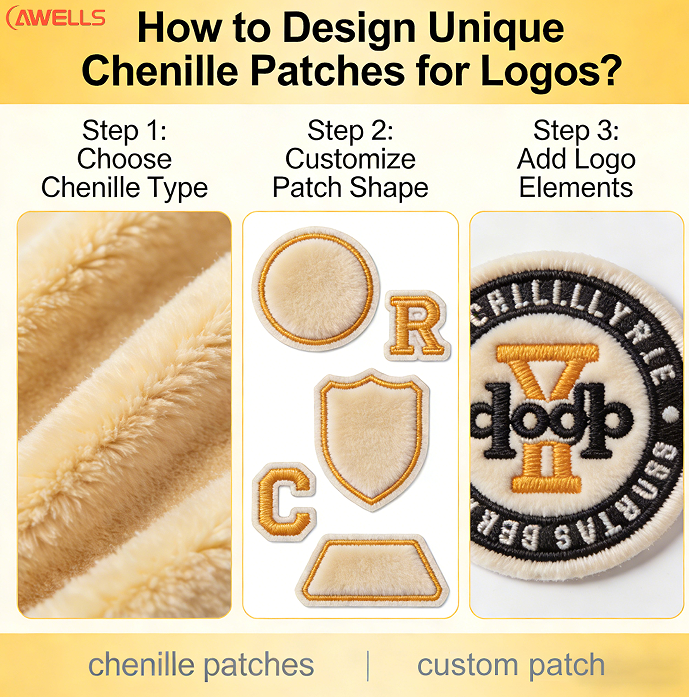
Understanding Chenille Patches: Texture, Structure, and Brand Impact
The looped yarn construction of chenille patches gives them that immediate tactile quality people love so much. The resulting texture is both soft to touch and adds dimensionality visually. For logo applications especially, this works really well when what counts most is making a strong statement rather than fine detail work. Many companies take advantage of this texture factor to boost brand visibility. The fuzzy surface actually interacts with light in a different way compared to smoother materials, which makes colors look more vibrant. Plus, these patches tend to hold their color better over time without fading as quickly as other options might.
Durability reinforces brand perception, as quality chenille withstands repeated washing without shedding loops. Its dimensional properties ensure logos remain visible even at a distance, transforming uniforms or merchandise into memorable brand touchpoints. Simple shapes maximize impact, as excessive detail gets lost in the yarn’s natural loft.
| Design Priority | Chenille Advantage |
|---|---|
| Visibility | 3D texture enhances depth perception |
| Durability | Maintains integrity after 50+ washes |
| Brand Recall | Tactile surface creates sensory memory |
The raised pile naturally draws attention, making chenille patches particularly effective for sports teams, corporate apparel, and promotional items where instant recognition matters. By balancing softness with structural resilience, they convey both tradition and quality—key brand attributes that resonate with audiences.
Logo Adaptation for Chenille Patches: Simplification and Legibility Rules
When turning logos into chenille patches, there's some serious thinking involved to make sure they still look good but also take advantage of how soft and textured chenille actually is. The thing about chenille compared to regular embroidery? Those loops in the yarn mean we need simpler designs. Complicated stuff just doesn't work when it gets smaller, and all those fine lines get lost in the fluffy pile. What works best for keeping brands recognizable? Big shapes, lots of open space around them, and smart color choices that stand out even when viewed from across the room. This approach helps preserve what makes each logo unique no matter how big or small it ends up being.
Bold Shapes, Minimal Detail, and Eliminating Floating Elements
When designing for production, it's best to get rid of those delicate parts first. Thin lines below quarter inch thickness, gradient fills, and any floating shapes tend to either blend together or fall apart when manufacturing happens. Instead of keeping intricate symbols, turn them into bold solid shapes. Replace those tiny delicate lines with thicker borders that stand out better. Putting together nearby design elements makes everything stronger overall. Patches that have fewer separate pieces just hold up better in the long run. Take a look at logos with multiple stripes, for instance. They work much better when simplified down to one big outlined rectangle. The design still looks good from afar but avoids all those pesky stitching problems that come with complicated patterns.
Font and Graphic Optimization for Small-Scale Chenille Patches
Good typography needs to be brutally simple. Stay away from those fancy serif fonts and anything that looks too squeezed together. Go for bold sans-serif styles where all the strokes have similar thickness throughout. Characters need to be at least around 0.3 inches tall, maybe a bit bigger if possible. When it comes to spacing between letters and words, give them about 15 to 20 percent more room compared to what we see in printed materials. Hollow letters just won't work when making things like chenille fabric - they disappear completely. Icons should stick to basic shapes without too many intricate details inside. Focus instead on the main outlines that define each symbol. And remember, when working with small patches under 2 inches across, stick to just two colors. Tests show people recognize these better than complicated designs with multiple shades fighting for attention.
Chenille Digitizing Techniques: Stitch Mapping for Authentic Texture
Moss, Chain, and Spiral Fill Applications in Logo Digitizing
When it comes to turning flat logos into those cool dimensional chenille patches, specialized stitch mapping plays a big role. Three main techniques get used here. First up is moss stitch, which works great for filling in those big spaces like mascot bodies. What makes it special? Those little upright yarn clusters create that signature soft feel everyone loves. Then there's chain stitch, perfect for giving outlines and borders some structure. The interlocking loops basically hold everything together and stop things from fraying out. And let's not forget spiral fill for those tricky curved parts like lettering. This technique keeps the texture even across curves without any annoying puckering because the stitches just follow the shape naturally. Brands really care about this balance between looking good and feeling right, especially when they want their corporate logos transformed into something people actually wear proudly on jackets and hats.
Avoiding Over-Digitization: Preserving Chenille’s Signature Softness
Excessive stitch density remains the primary threat to chenille’s tactile appeal, as industry testing shows stiffness increases by up to 40% in over-digitized patches. To maintain softness:
- Limit underlay stitches to essential anchor points
- Use open fill patterns instead of solid satin coverage
- Preserve negative space between design elements
Stabilizer selection further prevents rigidity; water-soluble films dissolve cleanly while tear-away options cushion dense sections without adhesive residue. This restraint ensures logos retain both visual clarity and the velvety handfeel defining premium chenille patches.
FAQ Section
What is a chenille patch?
A chenille patch is a type of patch made with looped yarn that provides a soft, textured surface, commonly used for decorative purposes on apparel.
Why are chenille patches popular among brands?
Chenille patches are popular because they enhance brand visibility through their vibrant colors and textures while maintaining durability over repeated washings.
What designs work best for chenille patches?
Designs with bold shapes, minimal details, and simple fonts are best for chenille patches. Complex designs can lose detail in the yarn's texture.
How can excessive stitch density affect chenille patches?
Excessive stitch density can make chenille patches stiff, reducing their tactile appeal and compromising their soft texture.