 EN
EN

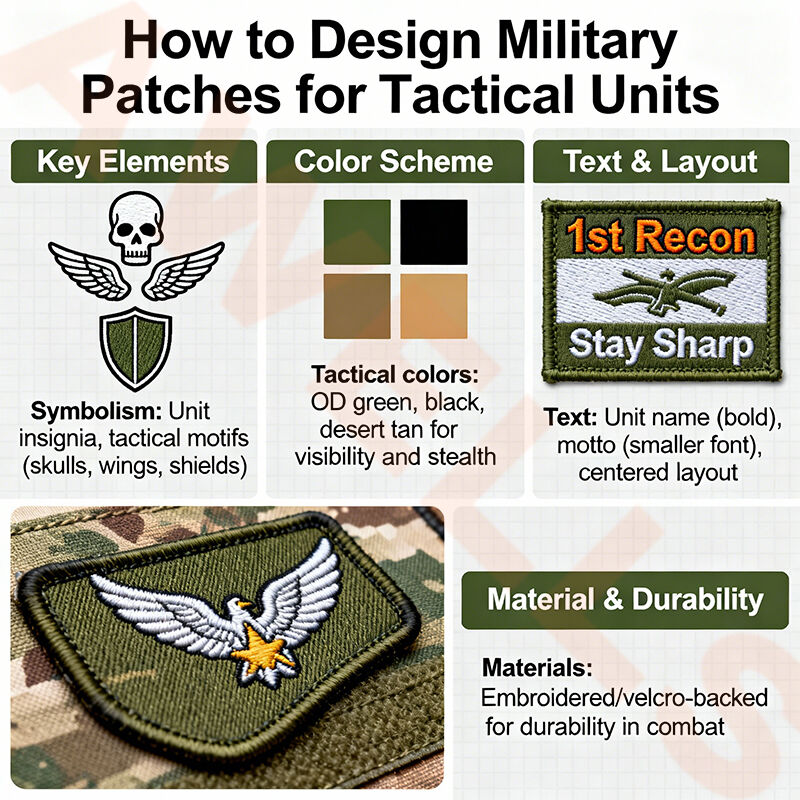
Core Functional Requirements of Military Patches
Durability, Modularity, and Identification: Why Tactical Function Dictates Form
Battlefield conditions can really take their toll on military patches. They need to handle things like constant rubbing against gear, extreme temperatures, and lots of washing without losing their appearance. The best ones use thick embroidery threads or solid PVC material that won't fray easily. And the stitching? That has to hold up after hundreds of laundry cycles according to tests by Textile Performance Institute back in 2023. Many modern patches come with Velcro backs that let soldiers swap out badges quickly when moving between different missions. Sometimes they need to change identification markers in just a few seconds as they transition between tasks. Simple designs work best for quick recognition too. Big letters over 8 points tall, not too many colors, and strong contrasting symbols help troops spot each other from over 50 meters away even when visibility is poor. All these features turn what might look like ordinary patches into essential equipment for keeping units organized and assessing threats on the ground.
Morale vs. Official Patches: Authorization, Purpose, and Usage Boundaries
The official military patches need proper authorization from the heraldry offices before they can be used. They serve basic identification purposes such as showing which unit someone belongs to or indicating their rank when fighting on the battlefield. These patches must follow specific rules about how big they are and where exactly they go on uniforms so everyone looks consistent in operations. Morale patches tell a different story though. While these custom designs with team logos or catchy phrases help build camaraderie among soldiers, most combat units restrict them in actual war zones. According to a report from 2022, around three out of four frontline units won't let troops wear anything outside standard regulations because it could interfere with night vision equipment or just look too messy during fights. That's why commanders usually only allow these motivational patches during drills at base camps, weighing the good vibes against potential dangers in real combat situations.
Regulatory Compliance: AR 670-1 and U.S. Army Institute of Heraldry Standards
Designing military patches demands strict adherence to regulations like AR 670-1 and U.S. Army Institute of Heraldry (TIOH) standards. Non-compliance risks uniform violations and operational compromises.
Authorized Placement, Size Limits, and OCP-Specific Patch Locations
The placement rules for insignia aren't something anyone really wants to mess with. According to AR 670-1, those shoulder sleeve insignias (SSIs) on Operational Camouflage Pattern (OCP) uniforms need to sit pretty close to that shoulder seam, no more than half an inch away. When it comes to patch size, there's a limit too. Nothing bigger than 3.5 inches tall or 4 inches wide will do. And let's talk about morale patches specifically. These aren't supposed to be worn on actual combat uniforms at all. They belong on backpacks or other equipment when soldiers aren't engaged in tactical operations. For Velcro backed patches, they have to meet certain military specifications for durability. The hook-and-loop system needs to hold up under field conditions, otherwise nobody wants to deal with loose patches flapping around during missions.
IR Compliance, Color Restrictions, and Thread Palette Requirements
Getting infrared compliance right matters a lot during nighttime ops. Military patches need to stay almost completely invisible under IR light, which means using those special TIOH approved synthetic threads that reflect practically nothing. When it comes to color options, the OCP thread system keeps things pretty limited - basically just Coyote Brown (#498), standard Black (#801), and some greens that blend with foliage without standing out. Bright fluorescent or neon colors? Definitely not allowed since they give away position easily. For embroidered patches, stitch density needs to be really tight, at least seven stitches per millimeter, otherwise edges start to fray after a while. Matte finish threads work better for staying hidden than shiny ones most of the time according to testing across various environments.
Design Best Practices for Tactical Legibility and Symbolic Clarity
Simplicity at Scale: Line Weight, Negative Space, and Font Selection for Rapid Recognition
Good tactical identification really comes down to keeping things simple. When designing, go with thicker lines at least half a millimeter wide to avoid those annoying visual overlaps when conditions get tough. Leaving enough empty space around elements is super important too. A good rule of thumb is to keep at least one and a half times the width between components to cut down on clutter. For text, stick with clean sans serif fonts such as Arial Narrow. Make sure they're no smaller than eight points so people can actually read them from a distance. Research indicates that simpler designs help folks spot what they need up to thirty two percent faster in situations where visibility is poor.
Color Strategy: OCP Thread Palette, Camouflage Context, and Psychological Impact
When it comes to OCP compliance, thread colors are pretty much set in stone these days. Most gear ends up being coyote brown, some kind of foliage green, or various shades of tan that blend into most environments. The regulations aren't just about looking good though. There's actually a strict limit on how much contrast different colors can have against each other, around 30% max, because this helps reduce visibility under infrared light. While subdued colors definitely help soldiers stay hidden from enemies, military units still need ways to identify themselves. That's why certain high visibility elements like unit-specific red markings remain important for boosting troop morale despite the camouflage requirements. Studies on color psychology back this up too. Deep blue tones tend to give off a sense of calm and stability, whereas green colors often make people feel more alert and ready for action.
Material Selection and Backing Options for Field-Ready Military Patches
The choice of materials and backings makes all the difference when it comes to how well patches perform in actual combat situations. Most manufacturers stick with polyester thread because it stands up much better to sunlight than rayon does, plus it can handle about 80 percent more stress before breaking. This means unit insignias stay put even after months of being dragged through desert sands, soaked in rainwater, or rubbed against rough surfaces during operations. Tactical teams typically go with Velcro hook-and-loop systems as their preferred backing option since they allow quick changes between different mission patches without violating Army Regulation 670-1 requirements. For those times when something needs to stay permanently attached, sewing on the backing gives the strongest hold possible. Iron-on options work just fine for training equipment or civilian use though, and they take roughly twice as long to apply compared to sewn ones. Field testers have found these factors matter quite a bit in real world conditions where durability counts.
- IR Compliance: Avoid metallics or PVC that reflect infrared
- Flexibility: Opt for merrowed borders to prevent fraying during pack abrasion
- Weight: Ultra-thin twill backings reduce bulk under body armor
The on-site effect depends on the balance between material elasticity and actual accessories - a thread count exceeding 150/needle can prevent scattering, while the shear strength of Velcro fasteners must exceed 15kg/cm2 to withstand gear operation.