 EN
EN

Design Fundamentals: Fonts, Colors, and Artwork Requirements
How Font Selection Impacts Readability in Patches Embroidery
What font we pick makes all the difference when it comes to reading embroidered patches. For best results, stick with bold sans serif styles such as Arial or Helvetica since they stay clear even when tiny. Most experts recommend keeping letter height around 0.3 inches minimum so people can actually read them without squinting. Those fancy script fonts? They tend to get fuzzy after stitching because of their delicate lines and cramped letters. According to research from last year, nearly four out of five confusing patches had either too much decoration or poor spacing between characters. This just goes to show why simple designs work better than trying to look fancy with complicated typography choices.
Optimizing Color Palettes for Visual Appeal and Stitch Efficiency
Keeping thread colors down to around four or five makes things much easier during production runs without making the final product look boring. Bright contrasts work wonders for visibility, think white letters against dark blue backgrounds for example. Then there are those similar tones, like different greens that create depth without needing constant color switches throughout the piece. Studies indicate that sticking with simpler color schemes can boost how well people recognize logos or patterns by about 40 percent when compared to overly complicated designs. Plus manufacturers report saving roughly 15 to 20 minutes per garment just from reducing the number of times they need to change threads between colors.
| Design Type | Recommended Thread Colors | Avoid |
|---|---|---|
| Text-Dominant | ❤ 4 colors | Gradients |
| Detailed Artwork | ❤ 6 colors | Neon/fluorescent |
Using Gradients Effectively Without Losing Embroidery Detail
Gradients just don't work right in embroidery really. What works better is creating stepped effects using three main shades dark, medium and light to give that illusion of depth. The process takes around 1,200 to 1,500 stitches for each square inch which helps keep things looking sharp and defined. When we start adding too many colors though problems pop up. Most people find designs with over five different hues get all blurry and unappealing, particularly when applied to rough surfaces such as baseball caps or canvas bags. A recent survey found that nearly two thirds of folks aren't happy with how these complicated color changes turn out in practice.
Artwork Resolution and Design Detail for High-Quality Output
For best results when working with digital designs, go for vector files at least 300 DPI resolution. This helps keep things sharp instead of getting all blurry when transferred. Also important is leaving some space between different parts of the design, maybe around half a millimeter or so, which prevents those annoying stitching problems where threads cross over each other. Industry data from last year shows most issues with patches actually come from low quality artwork under 150 DPI. We've seen in practice that sticking to clean vector lines cuts down on stitching mistakes by about half compared to using regular bitmap images. The difference makes a big impact on how professional the finished product looks overall.
Material Choices: Twill, Felt, PVC, and Canvas Explained
Comparing Durability and Texture of Twill vs. Felt in Custom Patches
The tight weave of twill fabric gives it serious staying power against wear and tear. Most twill fabrics can handle over 50 washes without showing signs of fraying around the edges. The smooth surface also works great for detailed embroidery work, which is why so many companies choose twill for their uniforms when they need something that looks good day after day. Felt has that old school charm with its fuzzy texture, but let's face it - it doesn't last nearly as long. After just 20 wears, felt retains about 72% of what it was originally, while polyester twill keeps going strong at around 94%. A recent fabric test from 2024 showed twill standing up to abrasion three times better than felt does. That kind of performance makes twill the go-to choice for places where clothes get put through the wringer regularly, like construction sites or warehouses.
When to Use PVC or Canvas for Enhanced Resilience
PVC patches work really well outdoors because they can handle UV rays and stay dry much better than regular woven materials. Some lab tests show they last about eight times longer when exposed to harsh weather conditions. Canvas is another good option since it has both bendy qualities and solid strength. The rough texture of canvas fabric actually holds up pretty well even when someone tries to stitch intricate designs onto it. People have managed to get around seven thousand stitches per square inch on canvas without the material warping or distorting. That makes canvas especially suitable for things like military gear or other equipment that needs detailed markings while still being tough enough to withstand rough handling.
Balancing Fabric and Thread Selection for Appearance and Longevity
Pairing nylon thread with PVC backing reduces color fading by 40% in outdoor applications versus rayon. For twill patches, trilobal polyester threads enhance reflectivity while maintaining wash stability, preserving 98% of vibrancy after industrial laundering—a key advantage for long-term wear.
Embroidery Density, Thread Types, and Coverage Balance
Understanding Embroidery Density and Its Impact on Patch Quality
The density of embroidery, which is basically how many stitches there are in each square inch, really makes a difference when it comes to how clear and long lasting the design will be. When we talk about high stitch counts between around 7,000 to 10,000 per square inch, these definitely show off finer details but come at a price both literally and figuratively since they put extra strain on fabrics too. Most folks find that getting about 75% thread coverage strikes just the right note. It keeps things breathable enough without making edges fray apart so easily. Now for those patches packed full of letters and words, going down to roughly 50% density helps avoid all that annoying thread pile up while still keeping text readable and the patch itself sturdy enough. The Textile Arts Council mentioned this back in 2023 after looking at lots of different samples themselves.
Polyester vs. Rayon vs. Metallic Threads: Performance and Aesthetic Trade-offs
When it comes to lasting power, polyester threads really stand out. They resist UV fading and hold up against moisture around 40% better than rayon does. Sure, rayon has that beautiful sheen that makes decorations pop, but folks working with it need to add stabilizers when making intricate patterns. Then there's metallic thread which definitely catches the eye with its sparkle, though these threads tend to snap easily during stitching. Most embroiderers find they need special needles and have to slow down their machines quite a bit when working with them. According to recent research from last year on embroidery materials, blending polyester with metallic actually cuts down on production mistakes by about 18% over using pure metallic alone. The best part? The fabric still looks shiny while being much easier to work with.
Balancing Coverage and Breathability in High-Density Designs
Overly dense stitching can strain fabric, leading to puckering or premature wear. To mitigate this, use 60–70% fill stitch density for large areas and reserve full saturation (100%) for borders or focal points. This layered approach reduces material stress by 22% while maintaining sharp, defined edges, according to digitization analysis tools.
Avoiding Over-Embroidering: Managing Material Stress and Stitch Load
Excessive stitching compromises the integrity of substrates like twill and PVC. Keep stitch load at or below 8,000 stitches per square inch to preserve durability. Incorporating underlay stitches reduces top-layer tension by 30%, enhancing stability. For curved patches, staggered stitch patterns distribute stress evenly, preventing distortion during use.
Size, Shape, and Structural Design Considerations
Minimum Size Guidelines for Legible Text and Fine Details
For good readability and proper stitching results, nobody wants text smaller than half an inch tall. The lines themselves need to be at least quarter inch thick so threads don't bleed through. When it comes to fancy details such as those little serif bits or shaded areas, there needs to be about 1/16 inch space between each stitch otherwise everything just gets blurry looking. Manufacturers have found that when people skip following these basic guidelines, almost four out of five patches get returned. Makes sense really, since nobody likes receiving something they can barely read or that looks poorly made.
| Element | Minimum Size | Example Use Case |
|---|---|---|
| Text Height | 0.5" | Brand logos |
| Line Thickness | 0.25" | Military insignia |
| Intricate Details | 1/16" | Floral motifs |
Challenges with Complex Shapes in Hooping and Cutting Methods
Pointy corners and skinny projections like star tips or animal shapes tend to get messed up when hoop work is done and edges fray after laser cutting. According to industry stats from last year, patches featuring over five different shapes saw nearly half more problems compared to simpler designs. For better results, keep outlines straightforward and give those curves at least a quarter inch of rounding. This small adjustment makes all the difference in getting professional looking finished products without constant rework.
Design Tips for Curved, Rounded, or Irregularly Shaped Patches
- Use satin stitches with shorter runs (❤0.15") to minimize puckering on arcs
- Opt for single continuous borders instead of fragmented lines to enhance durability
- Avoid concave areas smaller than 0.3 inches to prevent thread clumping
A 2024 thread density study showed that curved designs with balanced stitch direction retain 89% more color vibrancy after 50 washes. Maintain 0.12 inches of spacing between contrasting elements to achieve clean merrowed edges.
Production and Finishing: Digitization, Backing, and Quality Assurance
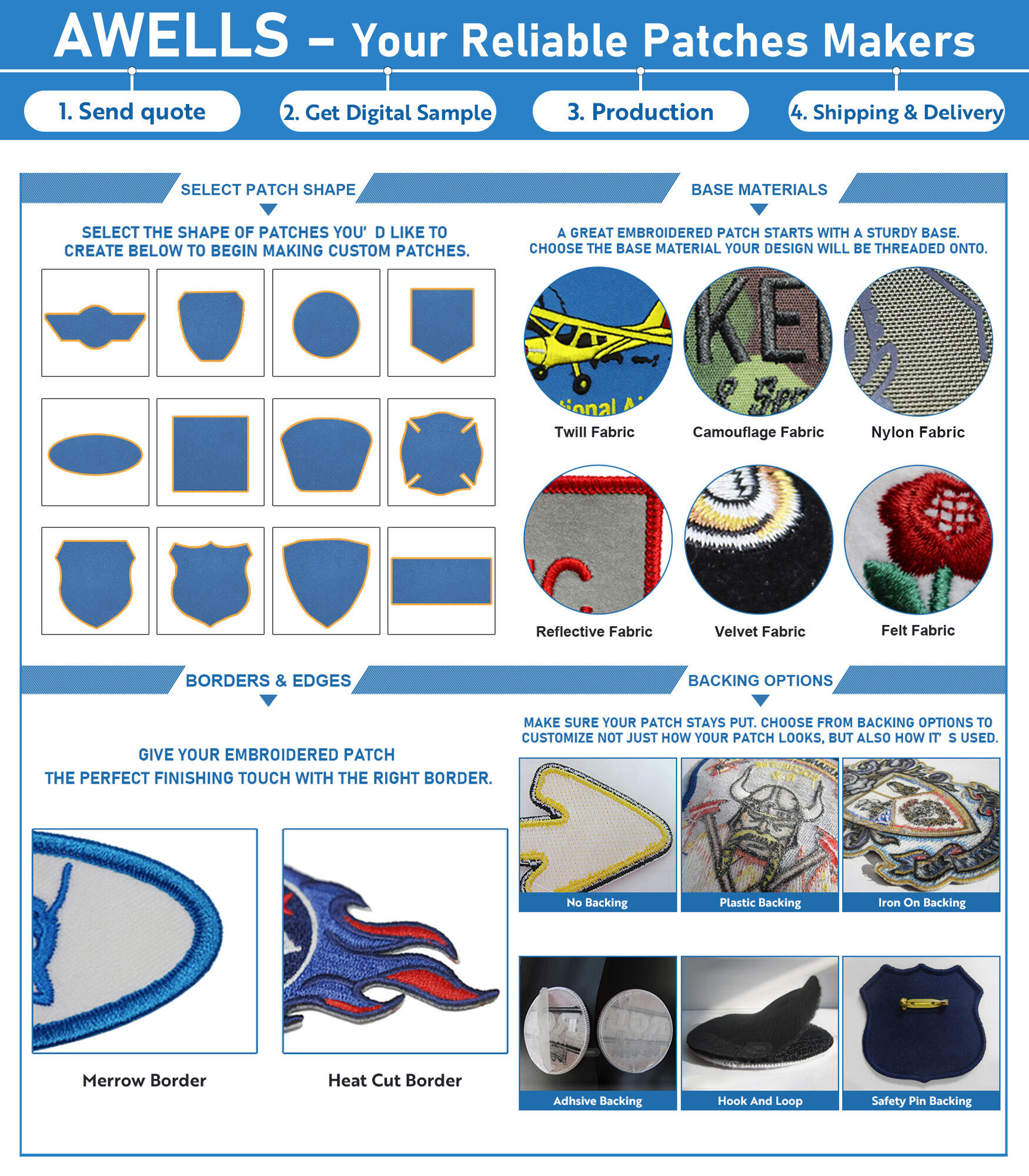
Creating high quality embroidered patches really comes down to getting three things right: digitization, finishing touches, and proper quality checks. The CAD CAM software does most of the heavy lifting here by turning designs into detailed stitch instructions that capture everything from simple text to complex gradients and sharp edges. When it comes to backing materials, there's no one size fits all approach. Iron on options are great when speed matters, but for something that needs to last forever, nothing beats good old sew on twill. Tactical gear manufacturers swear by Velcro though, even though it adds some weight. Their products can handle thousands of attachments before showing wear and tear. For fabric patches, merrowing the edges stops them from unraveling after repeated washing. And if working with rigid materials like PVC, hot cutting gives those clean straight lines that just look better in the long run.
After they come off the production line, patches go through all sorts of tests to make sure they hold up over time. We check how well they resist washing according to ASTM D7021 standards and run them through abrasion tests with over 40,000 rub cycles using Martindale equipment. This helps us confirm colors stay put and the patch itself doesn't fall apart after repeated use. Our automated systems catch around 98 percent of stitching issues before anything gets shipped out, which beats what our workers can spot with their eyes alone. When it comes to big orders, switching to digital quality control has cut down on having to fix things later by about two thirds. This means we get consistent batches ready for customers much faster than traditional methods would allow.