 EN
EN


Why Requesting a Custom PVC Patch Sample Is Essential Before Production
Requesting a physical sample of your custom PVC patch before full production is a non-negotiable quality assurance step. Unlike digital proofs—which can’t replicate real-world lighting, texture, or dimensional accuracy—a tangible prototype lets you verify color fidelity, shape integrity, and exact thickness against your design specs. Minor flaws—such as a 0.2mm edge misalignment, a subtle Pantone shift, or inconsistent flexibility—often go undetected on screen but become costly at scale. Without this checkpoint, errors may only surface after hundreds or thousands of units are produced, triggering rework, delays, and brand-reputation risk. A single sample empowers you to validate durability, appearance, and manufacturability—and make targeted refinements before committing to mass production. It’s the most cost-effective safeguard for turning design intent into a consistent, high-performance final product.
What to Evaluate in Your Custom PVC Patch Sample
Material Integrity: Flexibility, UV Resistance, and Colorfastness Testing
Assess material performance using practical, field-relevant tests—not just lab claims. Gently bend the patch: premium-grade PVC should flex smoothly and rebound without micro-cracking. For UV resistance, expose the sample to direct midday sunlight for 14 days; noticeable fading within that window signals inadequate stabilizer formulation—especially critical for outdoor or vehicle-mounted applications. To test colorfastness, perform a wet rub test (ASTM D5034) on saturated areas: rub with a damp cloth under light pressure—no pigment transfer should occur. While industry standards like ISO 4892-3 specify 500-hour accelerated weathering for certified UV stability, your 14-day real-world exposure serves as an accessible, actionable benchmark. Failures here directly impact longevity and brand consistency in active use environments.
Tactile & Visual Accuracy: Matching Design Specs, Thickness, and Edge Finish
Validate three core dimensions of physical fidelity—visual, dimensional, and finish—using objective tools and established tolerances:
- Visual alignment: Compare the patch side-by-side with physical Pantone Solid Coated swatches under daylight-balanced (5000K–6500K) lighting. Reject if delta-E exceeds 5.0—the widely accepted tolerance for brand-critical color matching.
- Dimensional precision: Measure thickness at five points (center + quadrants) with calibrated digital calipers. Variance beyond ±0.3mm suggests mold wear or inconsistent injection pressure—both red flags for bulk consistency.
- Edge quality: Examine borders under 10x magnification. Acceptable flash lines must be ≤0.1mm and uniformly trimmed; inconsistent beveling or visible tool marks indicate suboptimal tooling maintenance.
These checks catch production inconsistencies early—preventing systemic defects from propagating into your full order.
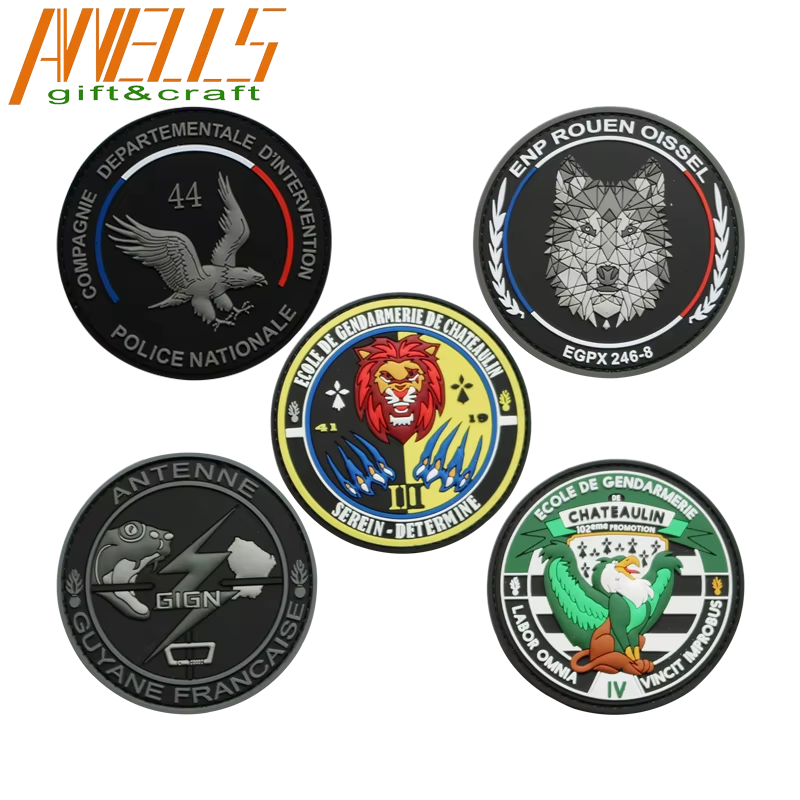
How to Choose a Reliable Custom PVC Patch Supplier Based on Sample Service
Key Evaluation Criteria: Sample Lead Time, MOQ Flexibility, and Policy Transparency
A supplier’s sample process is the clearest indicator of operational discipline and customer commitment. Prioritize vendors that demonstrate responsiveness, scalability, and clarity—not just marketing promises.
| Evaluation Criterion | What to Examine | Why It Matters |
|---|---|---|
| Sample Lead Time | Confirmed turnaround from artwork approval to shipment (e.g., 5–10 working days). | Consistent, predictable lead times reflect reliable tooling, scheduling, and logistics—not just optimistic estimates. |
| MOQ Flexibility | Ability to produce 1–5 functional samples without requiring bulk-order commitments. | Low-MOQ sampling lowers your risk and investment while enabling hands-on validation—essential for startups, limited-edition runs, or complex designs. |
| Policy Transparency | Explicit terms covering sample cost structure, shipping responsibility, revision limits (e.g., “1 free revision”), and refund eligibility for specification failures. | Ambiguity here often masks hidden costs or inflexible processes—red flags for long-term partnership viability. |
A trustworthy supplier provides a detailed sample quote—including material grade (e.g., “UV-stabilized, phthalate-free PVC”), Pantone-matched color verification method, and edge-finishing options (e.g., soft bevel vs. sharp cut)—within 24 hours of receiving finalized artwork. Many confidently offer first-sample discounts or complimentary express shipping. Conversely, avoid partners who require full payment before shipping a sample, withhold production timelines, or refuse to disclose mold or material certifications. When your sample service is transparent, responsive, and technically grounded, it signals a supplier prepared to deliver repeatable quality—not just one-off units.
FAQ
Why is it necessary to request a physical sample of a custom PVC patch?
Requesting a physical sample ensures real-world accuracy in color, texture, and dimensions that cannot be fully replicated with digital proofs. It helps identify flaws early before mass production.
How can I test UV resistance effectively?
Expose the sample to direct sunlight for 14 days to check for fading. This practical benchmark helps evaluate its longevity in outdoor environments.
What dimensional tolerances should I check in a sample?
Measure patch thickness at multiple points and ensure it is within ±0.3mm to confirm consistency and molding precision.
What should I look for in a trustworthy supplier’s sample service?
Reliable suppliers offer clear sample lead times, low-MOQ sampling options, and transparent policies for revisions, costs, and refunds.