EN

Virgin PVC Composition and Additive Engineering for Long-Term Durability
Why Virgin PVC Outperforms Recycled Material in Tensile Strength and Colourfastness
Virgin PVC starts with polymer chains of precisely controlled molecular weight and narrow distribution—free from the thermo-mechanical damage inherent in recycling. Each reprocessing cycle induces chain scission, reducing entanglement density and compromising load-bearing capacity. As a result, virgin resin delivers consistently higher tensile strength and elongation at break—critical for resisting cracking during flexing, stretching, or stitching onto gear.
Colourfastness follows the same principle: recycled feedstocks carry residual pigments, fillers, and trace contaminants that act as photo-oxidation initiation sites. This leads to uneven fading, surface chalking, and premature aging. Virgin PVC’s uniform composition—paired with precisely dosed masterbatch pigments—ensures predictable, long-lasting colour retention through repeated laundering and intense UV exposure, preserving brand integrity over years of use.
Strategic Use of Plasticizers, Heat Stabilizers, and UV Inhibitors in Custom PVC Patch Formulations
Raw PVC is rigid and thermally unstable. Its transformation into a durable identification solution relies on targeted additive engineering during compounding. Plasticizers—whether phthalate or non-phthalate esters—intercalate between polymer chains, lowering the glass transition temperature to maintain suppleness in cold conditions and prevent bending-induced cracking. Heat stabilizers, such as calcium-zinc or organotin compounds, neutralize hydrochloric acid liberated during high-temperature molding; without them, autocatalytic degradation rapidly causes yellowing and embrittlement. UV inhibitors—including benzotriazole-based absorbers and hindered amine light stabilisers (HALS)—quench harmful radiation before it triggers chain scission. Together, this additive system enables patches to retain shape, colour, and strength across years of outdoor exposure, machine washing, and mechanical handling.
Optimized Layer Structure and Thickness for Mechanical Resilience
The longevity of a custom PVC patch depends significantly on its internal architecture. Thickness and layering are not arbitrary choices—they are engineered variables that dictate how a patch withstands physical stress, manages deformation, distributes force, and resists environmental intrusion at material interfaces.
The 0.8–1.2mm Sweet Spot: Balancing Flexibility, Wash Resistance, and Shape Retention
A thickness range of 0.8–1.2mm represents an empirically validated equilibrium for polymer-based patches. Below 0.8mm, insufficient sectional modulus leads to permanent edge curling and unacceptable shape distortion under industrial washing agitation. Above 1.2mm, excessive bending stiffness creates localized stress concentrations that initiate micro-cracks—accelerating fatigue failure. Within this sweet spot, the patch remains compliant enough to flex naturally with soft-goods substrates while retaining the mass and dimensional stability needed for high-fidelity shape retention across repeated mechanical strain.
Backing Integration: PVC-on-PVC Lamination vs. Hybrid Fabric-Reinforced Substrates
Delamination at the substrate interface remains a leading cause of field failure. The backing integration method directly determines ultimate mechanical resilience.
| Integration Type | Primary Bonding Mechanism | Mechanical Resilience Outcome |
|---|---|---|
| PVC-on-PVC Lamination | Monolithic heat-fusion bond | Forms a homogeneous, void-free interface with excellent moisture resistance under standard friction and flex conditions. |
| Hybrid Fabric-Reinforced Substrate | Mechanical polymer-to-textile interlock | A textile scrim acts as a crack-arresting barrier, bridging the polymer matrix and distributing shear strain across thousands of fibers—preventing catastrophic single-plane delamination under high tensile loads. |
For mission-critical applications like tactical gear, hybrid reinforcement is superior. The fabric’s structural lattice absorbs and dissipates stress energy that would otherwise rupture a homogenous PVC-only bond—raising the functional failure threshold well beyond typical operational demands.
Precision Manufacturing Processes That Ensure Consistent Custom PVC Patch Integrity
3D Molding, Controlled Curing, and Edge-Sealing Techniques for Moisture and Delamination Resistance
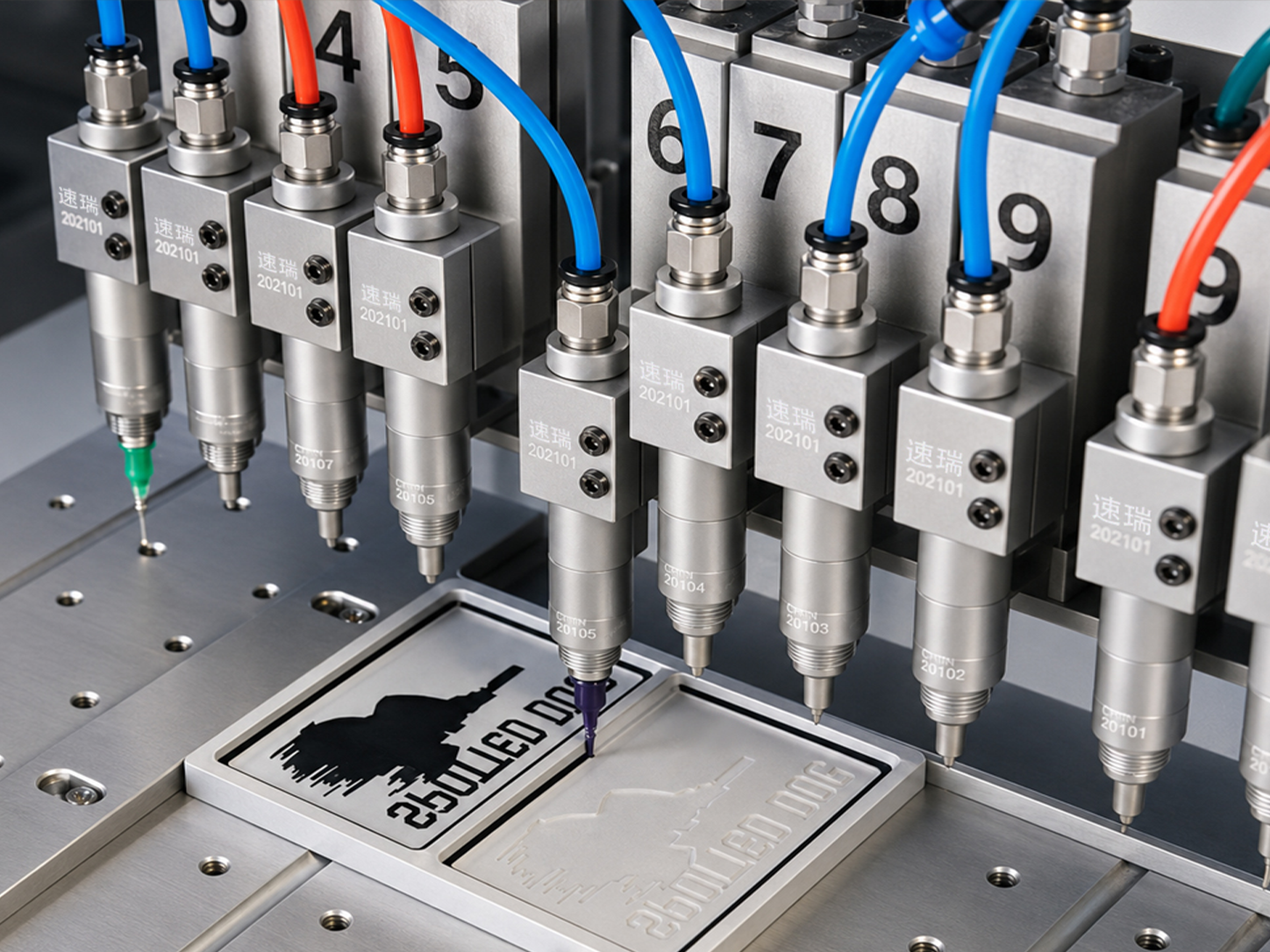
Durability begins with precision manufacturing. 3D molding uses CAD-engineered tooling to capture multi-level depths and textured surfaces with sub-millimeter fidelity. Liquid PVC is deposited in sequential layers—each color placed with accuracy—to build complex 2D or raised 3D structures. Controlled curing applies precise thermal profiles to solidify the material while fusing all layers into a single, flexible unit, eliminating internal voids and weak interfacial planes that could lead to delamination. After demolding, perimeter edge-sealing—via heat treatment or chemical sealant—creates a continuous moisture barrier. These integrated processes collectively block water ingress, prevent peeling, and preserve colour integrity across hundreds of wash cycles—ensuring consistent field performance, batch after batch.
Real-World Performance Validation: Testing Standards for Custom PVC Patch Durability
To validate real-world resilience—from repeated laundering and abrasion to prolonged UV exposure—manufacturers apply standardized mechanical, chemical, and environmental tests. These protocols go beyond visual inspection, quantifying performance limits and confirming that formulation, bonding, and sealing perform as engineered.
Key industry-standard evaluations include:
- Abrasion resistance (ASTM D4060, Taber abrader): Simulates rubbing against rough surfaces; premium PVC patches endure ≥5,000 cycles without visible surface degradation.
- Tensile strength and elongation (ASTM D412): Ensures patches resist tearing and deformation under mechanical stress—especially critical for hook-and-loop backed designs.
- Accelerated UV weathering (ISO 105-B02 or xenon arc): After 1,000 hours of concentrated UV exposure, top-tier patches exhibit minimal colour shift (ΔE ≤ 2.0), maintaining appearance through years of outdoor service.
- Wash fastness and colourfastness to laundering (AATCC 61): Confirms resistance to pigment bleeding, surface cracking, and matrix breakdown across heavy-duty wash cycles.
- Flex cracking resistance (DeMattia or Bally Flex tests): Validates cold-temperature flexibility and control of plasticizer migration—preventing cracks in sub-zero environments.
- Peel adhesion (for hook backing): Measures bond strength between PVC base and hook layer, ensuring secure attachment through thousands of engagement/disengagement cycles.
These rigorously defined tests provide procurement teams and end users objective, repeatable assurance that a custom PVC patch will retain structural integrity, legibility, and vibrant colour for the full service life of the garment or equipment it identifies.
FAQs
Q: Why is virgin PVC better than recycled PVC for patches?
A: Virgin PVC has a uniform composition and controlled molecular structure, offering superior tensile strength and colourfastness compared to recycled PVC, which may carry residual contaminants and degraded polymer chains.
Q: What additives are used to improve PVC patch durability?
A: Additives such as plasticizers, heat stabilizers, and UV inhibitors are used to maintain flexibility, prevent thermal degradation, and mitigate UV damage, ensuring long-lasting performance.
Q: How thick should a PVC patch be for optimal durability?
A: The optimal thickness for PVC patches is between 0.8–1.2mm, balancing flexibility, wash resistance, and shape retention.
Q: What tests ensure the longevity of PVC patches?
A: Tests such as abrasion resistance, tensile strength, UV exposure, wash fastness, and flex cracking validate the durability of PVC patches under real-world conditions.
Q: What is the advantage of a hybrid fabric-reinforced substrate?
A: Hybrid substrates integrate fabric reinforcement that absorbs stress energy and prevents delamination, making them ideal for applications requiring high mechanical resilience.
Table of Contents
- Virgin PVC Composition and Additive Engineering for Long-Term Durability
- Optimized Layer Structure and Thickness for Mechanical Resilience
- Precision Manufacturing Processes That Ensure Consistent Custom PVC Patch Integrity
- Real-World Performance Validation: Testing Standards for Custom PVC Patch Durability
- FAQs