 EN
EN

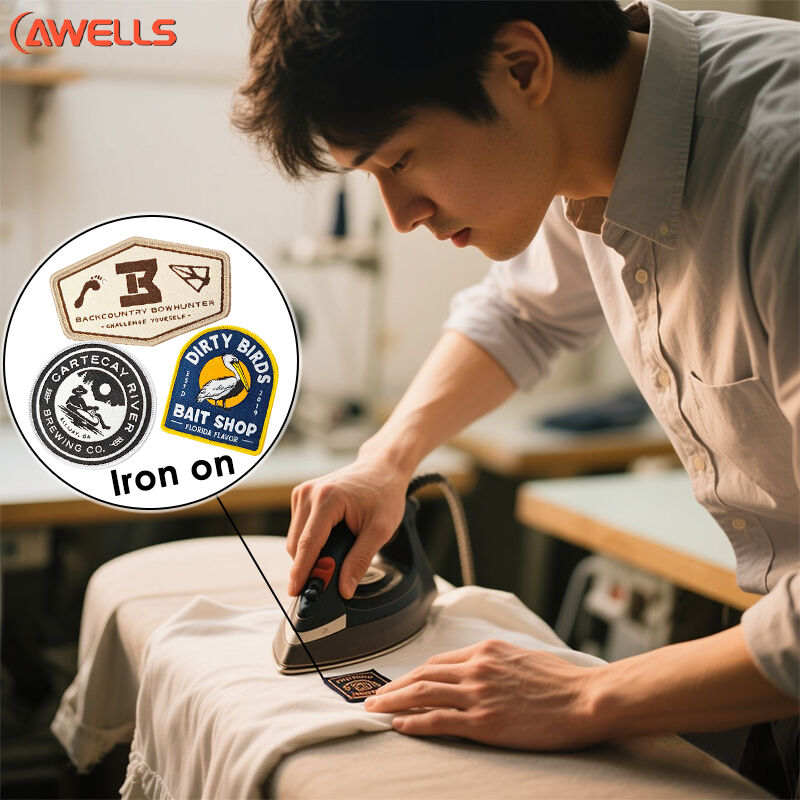
Pre-Application Preparation: Surface Cleaning, Precise Positioning, and Fabric Stabilization
Getting things ready right matters a lot when it comes to making sure those iron on patches stick properly to work clothes. Start off by giving the spot where the patch goes a good clean with at least 90% isopropyl alcohol on a lint free cloth. This helps get rid of all sorts of stuff like oils, grime, and chemicals left behind that just mess with how well the patch sticks. Factories and workshops tend to leave behind these invisible gunk particles that nobody sees but they really do weaken the bond between patch and fabric. Some studies show this stuff can cut down on stickiness by half or more, which explains why taking time to prep surfaces makes such a difference in the long run.
Next, position the patch precisely using heat-resistant tape or alignment guides, especially in compliance-critical zones like ANSI-certified high-visibility areas. For curved surfaces (e.g., sleeves or shoulders), temporarily secure corners with fabric tape to prevent shifting during pressing.
Finally, stabilize thinner or stretch-prone fabrics—such as ripstop nylon or polyester blends—with removable rigid backing inserted inside the garment. This prevents puckering and maintains fabric integrity under heat and pressure. Skipping these steps risks premature peeling or OSHA violations due to misaligned safety insignia.
Key preparation stages:
- Surface Cleaning: Use lint-free cloths and 90%+ isopropyl alcohol—never steam or petroleum-based solvents, which degrade flame-resistant (FR) treatments.
- Precise Positioning: Measure placement against OSHA/ANSI standards; use templates for batch consistency.
- Fabric Stabilization: Insert rigid, heat-tolerant backing beneath the application zone to resist distortion.
Critical Note: Flame-resistant (FR) fabrics require alcohol-free cleaners; petroleum-based solvents degrade FR treatments.
Correct Heat Application for Iron On Patches: Temperature, Pressure, and Timing by Fabric Type
Optimal Settings for Common Work Fabrics: Cotton Duck, FR Polyester Blends, and Ripstop
Precise heat application ensures compliant, durable adhesion for workwear. Follow these fabric-specific protocols:
- Cotton Duck: 350–400°F (177–204°C), high pressure, 45–60 seconds
- FR Polyester Blends: 280–300°F (138–149°C), medium pressure, 30–40 seconds—exceeding this range risks fiber damage and voids FR certification
- Ripstop Nylon: 300–320°F (149–160°C), medium pressure, 35–45 seconds
Exceeding temperature or time thresholds degrades fabric structure and adhesive performance; insufficient heat yields weak bonds prone to early failure.
Why Dry Heat Is Essential — Disabling Steam for Flame-Resistant and Reflective Workwear
Steam permeation alters chemical FR treatments and compromises retroreflective coatings—voiding certifications and violating OSHA requirements for verified thermal bonding. Always deactivate steam functions when applying patches to FR or reflective safety apparel. Use a Teflon sheet to diffuse heat evenly, then confirm adhesion with a post-cool peel test.
Post-Application Verification: Ensuring OSHA-Compliant Adhesion and Long-Term Patch Integrity
Industrial-grade iron on patches require rigorous post-application verification to meet Occupational Safety and Health Administration (OSHA) standards and withstand workplace demands. This involves two critical assessments:
Peel Test Protocol and Seam Integrity Assessment for Industrial Use
Give the material at least a day to fully cure before doing any tests. When ready, conduct a perpendicular peel test applying around 25 pounds of force. This is generally accepted as the right level for industrial fabrics according to ASTM D751 standards. Look closely for signs like bubbles forming, edges starting to lift off, or adhesive residue left behind these are clear indicators that the bond isn't holding properly. With patches applied along seams, check the threads themselves through a magnifying glass set to about 3 times normal size. Make sure the heat from application didn't weaken those stitches somehow. Shops that follow written procedures consistently see about 40 percent fewer problems with patches wearing out fast in areas where there's lots of friction and wear according to recent findings published in Textile Durability Journal last year.
Reapplication Guidelines When Initial Bond Fails on High-Stretch or Coated Work Fabrics
If initial adhesion fails on spandex blends, PVC-coated materials, or other challenging substrates:
- Remove residual adhesive with isopropyl alcohol
- Increase temperature by 15°F (9°C) and extend pressing time by 30 seconds
- Place silicone-coated parchment paper between iron and patch to buffer heat
- Apply uniform 20 PSI pressure using a pneumatic press when possible
Never reactivate existing adhesive with steam—it irreversibly degrades FR protection. After reapplication, repeat the full 24-hour cure and ASTM-aligned peel test.